

Cultural vocabulary
Lesson 4 of 5≈ 12 min
Words that don't really translate
Every language has words that resist translation. Portuguese saudade, Danish hygge, Japanese wabi-sabi — these words distill cultural concepts that other languages must explain in several sentences.
Shikomori has them too. This lesson presents a few. Knowing these words gives you direct access to entire areas of Comorian culture — sultans' architecture, social codes, festive rhythms, traditional music.
Essential cultural vocabulary
| Word | Approximate meaning | Cultural note |
|---|---|---|
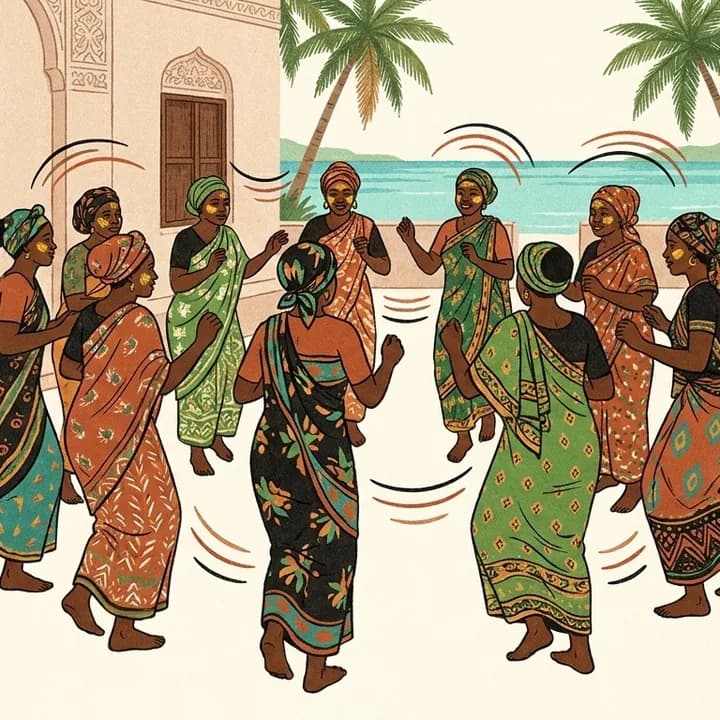
| mgodro | traditional dance | Performed at weddings and religious festivals |
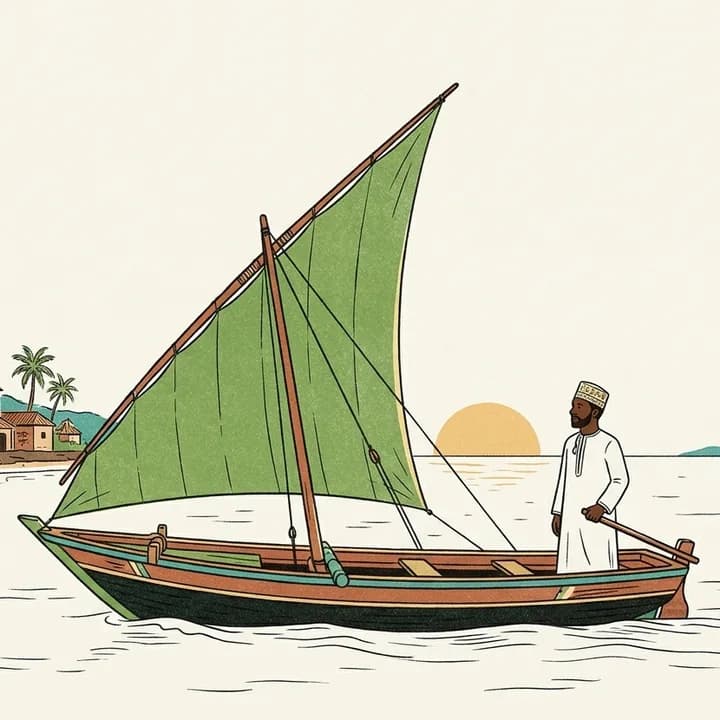
| djahazi | dhow (traditional sailboat) | Essential for inter-island trade |
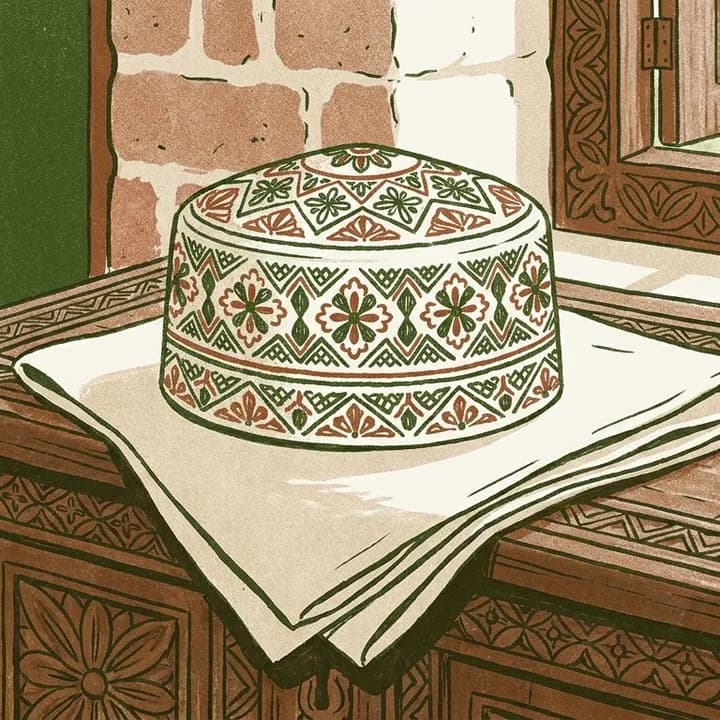
| kofia | ritual cap | Worn during religious ceremonies |
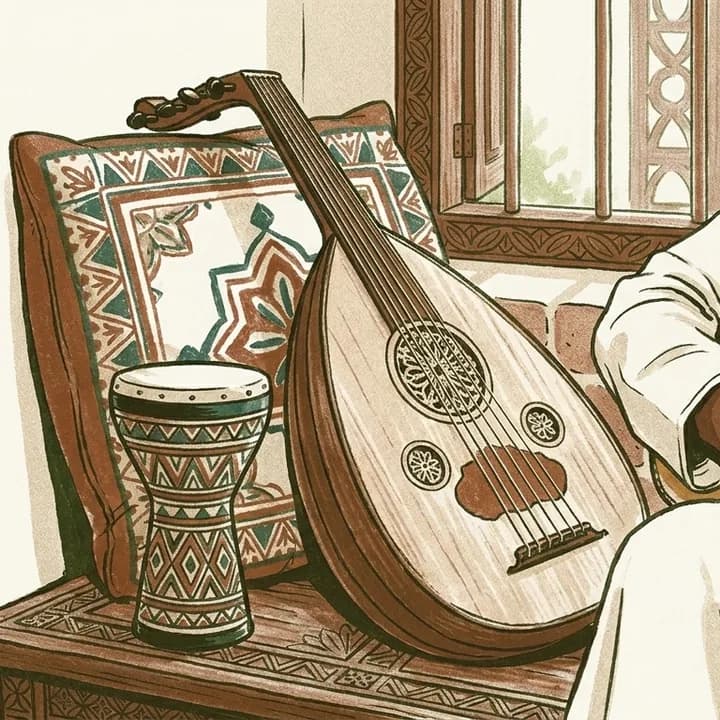
| ûdî | oriental lute | Central instrument of musical evenings |
| âda | custom, tradition | Informal social code, sometimes at odds with written law |
| mufumo | day, week | Comes from « mufumora » (a particular day) |
| djumbe | palace, royal residence | Historical architecture of the sultans |
| mfaume | sultan, king | Pre-colonial historical title |
| kanga | evening gathering | Family or community evening |
| twarab | traditional sung music | Arab-Swahili influence |
| maulida | sung devotional recital | Named after the Prophet's birth |
Listening
- mgodrodance
- djahazidhow
- kofiacap
- ûdîlute
- âda (custom)
Three brief portraits
Mgodro is a circle dance, open or gendered depending on the region. Drums, chants, synchronized movements. At weddings, it can last several hours and welcome dozens of dancers. It's also a rite of passage: children learn the social codes of their community there.
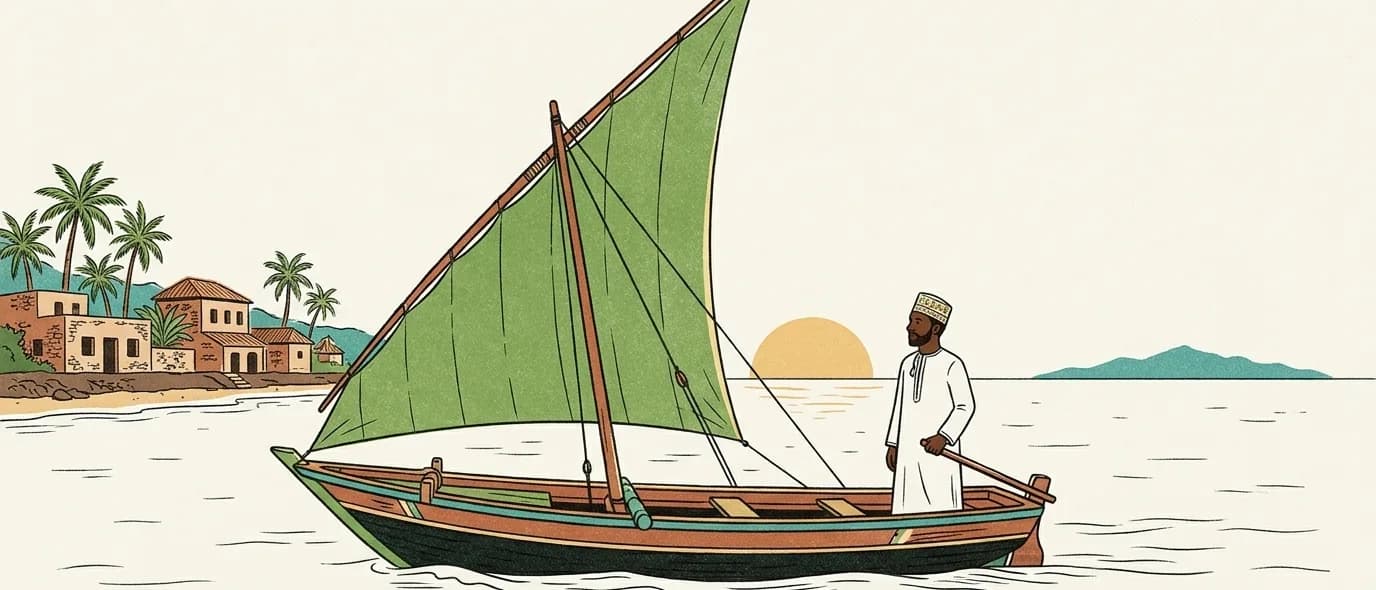
Djahazi is a lateen-sailed wooden boat, designed for inter-island navigation. Before modern ferries, it was the way to travel between Grande Comore, Mohéli, Anjouan, Mayotte. Today the djahazi survive mainly for fishing and tourism — but their silhouette remains a symbol of the archipelago.
The ûdî (lute) accompanies *twarab* — music with Arab-Swahili roots, often sung by women at weddings. Twarab pieces tell stories of love, separation, reunion. The best introduction: listen to Nawal el Kuwaitia (a world-renowned Comorian artist) or recordings of Abou Chihabi.
Âda — a central concept
The word *âda deserves special attention. Of Arabic origin (عادة « custom »), it refers to the set of unwritten rules* that govern Comorian social life: rules of marriage, inheritance, hospitality, mourning, respect for elders.
Âda is sometimes in tension with written law (French Civil Code in Mayotte, Comorian law in the Comoros) and with Islamic sharia. Many family or property disputes turn on which interpretation to prioritize.
It's also a source of pride: âda is what makes the Comoros unique, what distinguishes them from both the Swahili world and the Arab world. Preserving it while adapting to modernity is one of the archipelago's major current cultural challenges.
Practice
Mgodro is…
…a traditional ___.
The djahazi is…
…a ___.
Mini-quiz
Âda refers to…
…the ___.
Mahoran attire
From the Nisusoma shimaore booklet (CASNAV, 2019, p. 41 et 70).
| Shikomori | English | Note |
|---|---|---|
| bodi | top, bodice | put on first |
| saluva | salouva, wrap dress | written salouva in the source |
| kishali | shawl, headscarf | put on last |
| msindzano | traditional beauty mask | applied to the face |
| âfu | jasmine flowers | hair adornment |
| dahabu | gold, gold jewellery | Arabic loan |
| manzaraka | grand wedding |
Dances, music and games
From the Nisusoma shimaore booklet (CASNAV, 2019, p. 60-71).
| Shikomori | English | Note |
|---|---|---|
| mgodro | base rhythm of Mahoran dances | |
| debah | women's choir and dance | |
| mbiwi | women's dance | beaten out with bamboo sticks |
| shigoma | wedding dance | around the musicians |
| wadaha | pestle dance | |
| mrengue | traditional danced boxing | |
| dahira | danced religious chant | no instrument |
| tari | frame drum | accompanies the mulidi |
| mraha wa tso | sowing game | close to awale: bao, foro, tso |
Practice — festivities and attire
In Mahoran dress, the last piece is…
…the ___.
The Mahoran sowing game is called…
___.
Final lesson — the revolutionary legacy
Lesson 7.5 closes the journey with a detour through the shortest but most intense period of linguistic Comorianization: the Soilihist revolution (1975-1978), which forged a political vocabulary in Shikomori, refusing French and Arabic borrowings for modern concepts.